

Market: United States | Category: DMSO (Dimethyl Sulfoxide) | Launched: 25 May 2026 | Period: 28 May to 24 August 2026
The listing went live on 25 May 2026 with nothing behind it. Zero reviews. No sales history. No keyword rankings. No advertising data. Almost no organic visibility.
For a new product in a category buyers research carefully, that combination is the hardest version of the problem. There was no review count to build trust, no ranking to capture organic traffic, and no historical data to tell us which keywords were worth bidding on.
The objective was to establish the product in the market, generate the first sales, find the search terms that actually convert, improve keyword rankings, and build organic sales that would outlast the launch budget.
A complete PPC campaign structure was built from day one, covering keyword discovery, ranking, conversion and competitor targeting.
Six campaign types, each with a single defined purpose:
Separating them this way produced clean performance data per objective, which is what made every later decision defensible rather than guesswork.
During the launch stage, bids and budgets were run harder than they would be on a mature account. That was deliberate.
The early spend was buying seven things at once: immediate traffic, first sales, sales velocity, search-term data, keyword indexation, keyword rankings, and the first customer reviews.
This was a launch investment with a defined job, not a permanent advertising posture.
Customer search terms were reviewed on a rolling basis. High performers were pulled out of discovery campaigns and moved into dedicated campaigns with their own bids and budgets.
That meant proven terms got their own budget control instead of competing with unproven ones, and weak targets were paused before they consumed spend.
Negative targeting ran continuously alongside it, which is what kept the discovery campaigns from leaking budget as they widened.
Budget was not spread evenly. It was allocated by what each campaign was for and how it was performing.
Discovery campaigns got controlled budgets. Ranking campaigns for priority keywords got support. Converting campaigns were protected from budget caps. Consistently weak campaigns had budget reduced and moved toward stronger opportunities.
The allocation was adjusted on current performance rather than fixed at the start.
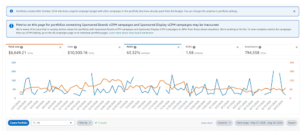
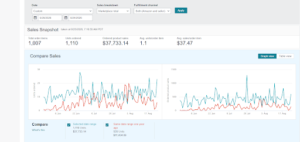
The number that matters is the split. Of $37,733.14 in total sales, $27,232.98 came organically. That is 72.2% of revenue arriving without ad spend behind it, on a listing that was three months old.
PPC contributed the other 27.8%, which is the point. The ads were not carrying the business by the end of the period. They had done their job of establishing it and then handed most of the volume to organic.
That shows up in the two ACoS figures. PPC ACoS was 63.32%, which looks expensive in isolation. Overall TACoS was 17.62%. The gap between those two numbers is the organic sales the advertising created. Every $1 of ad spend supported roughly $5.68 of total account revenue.
The 63.32% PPC ACoS is a launch-phase number, and it should be read that way. That spend was not only buying direct sales. It was buying keyword indexation, ranking movement, search-term data and the first reviews, none of which show up in an ACoS calculation.
Cost per order across the whole account was $6.60. For a product that had no reviews and no rankings twelve weeks earlier, that is the figure that tells you the launch worked.
The launch phase is finished. The next phase is efficiency.
Spend continues to come off weak targets and move toward keywords producing conversions and ranking value. PPC ACoS comes down without giving up the rankings and sales momentum the launch built. Controlled advertising support stays on established and high-potential keywords to protect both paid and organic visibility. Profitable search terms keep getting harvested into focused exact-match campaigns.
As the review count and sales history grow, conversion strength improves on its own, which makes every one of those moves cheaper.
Not during launch. A new listing has no reviews, no rankings and no conversion history, so early clicks convert worse and cost more. This account ran 63.32% PPC ACoS while overall TACoS sat at 17.62%, because the ad spend was also producing organic sales. Judge a launch on total account economics, not on ACoS alone.
For this product, organic reached 72.2% of total revenue within three months of launch. PPC conversions drove keyword indexation and ranking, which produced organic sales that cost nothing in ad spend. The speed depends on category competition, but the mechanism is the same: paid conversions are the ranking signal that organic growth is built on.
Not only on direct sales. This launch spent $6,649.21 over twelve weeks across six campaign types, each with a separate job: keyword discovery, search-term research, controlled testing, ranking, competitor visibility and negative targeting. The spend bought keyword data, indexation, rankings and the first reviews alongside the $10,500.16 in attributed sales.