Key Takeaways
The two irreversible points in the Amazon Vine program, what Amazon charges, and the product situations where enrolling is the wrong call.
- Vine Voices are not required to be positive. Amazon states participation “is not dependent on the reviewer providing positive feedback,” which is exactly why the reviews carry weight.
- There are two points of no return. You cannot cancel enrollment once a unit is claimed, and neither you nor Amazon’s selling partners can remove a published review.
- The fee structure is lower risk than most sellers think. Up to two units is free, and you are not charged at all if no review arrives within 90 days of enrollment.
- Vine is the only sanctioned route to a free-product review, because the unit is not conditional on sentiment. Compensation tied to a positive review is a policy violation.
- Four product profiles should not go near Vine yet, and all four are fixable before enrolling rather than after.
Most articles about Amazon Vine are enrollment walkthroughs. They cover the fee tiers, the 30-unit cap and the Brand Registry requirement, then tell you to sign up. Almost none of them tell you what happens when it goes wrong, which matters more, because Vine has two moments after which nothing can be undone.
That is not a reason to avoid it. Vine remains the only Amazon-sanctioned way to get reviews on a product nobody has bought yet, and for most well-built products it is the right move. It is a reason to be certain about the product before you enroll, rather than treating Vine as a way to find out whether the product is good.
This is written for a seller preparing a launch, deciding whether to put early units into Vine, and worried about what honest reviewers will say.
Quick Verdict: enroll or wait
Enroll when the product is finished. Final packaging, final instructions, final sizing, no open quality complaints from samples or a soft launch. Vine then does what it is for.
Wait when anything is still in flux. A packaging change, an instruction rewrite or an unresolved defect will show up in reviews you cannot remove, on a listing that will carry them for years.
Never enroll to find out if the product works. That is what sampling and a soft launch are for, and they cost far less than a 2-star Vine review on a new ASIN.
What does Amazon Vine actually cost?
Less than most sellers expect, and the risk structure is better than the headline fee suggests.
Amazon’s seller pages state the enrollment cost per parent product by unit count: up to 2 units is free, 3 to 10 units costs 75 dollars, and 11 to 30 units costs 200 dollars. Amazon notes that “there’s no additional cost for child products,” so a parent with several variations is covered by one fee.
Two clauses matter more than the price. Amazon states “you aren’t charged until 30 days after enrollment and after your first review is published,” and “if you don’t receive a Vine review within 90 days from the date of enrollment, you aren’t charged.” So the financial downside of enrolling is genuinely small. If nothing happens, you pay nothing.
The cost that matters is not the fee. It is the review.
What are the eligibility requirements?
Five, and two of them create timing problems people discover late.
Amazon states you need “a Professional selling account and a Brand Representative or Reseller role assigned to a brand enrolled in Amazon Brand Registry, or have generic products in your catalog.” That generic-product exception is real and rarely mentioned.
You need “a listing with FBA selected as the fulfillment method,” and “FBA inventory must be sent to Amazon fulfillment centers for products to be shipped to Vine Voices.” You need an image and a description. And the product must have “fewer than 30 reviews on its product detail page.”
The two timing traps:
Vine sits downstream of a received FBA shipment. Amazon recommends you “have your inventory available in our fulfillment network at least three weeks before your planned launch date.” You can enroll before inventory lands, but nothing ships to reviewers until it does.
The review ceiling closes on you. Fewer than 30 existing reviews is an eligibility condition, not a nice-to-have. Wait too long after launch and you lose access to the program entirely.
Also excluded: “adult, digital, and bundled products are not eligible for Vine.”
Where are the two points of no return?
This is the section the enrollment guides skip, and it is the reason to read Amazon’s own wording rather than a summary.
Point one: the claim. Amazon states that “if products have been claimed by Vine reviewers, you can’t cancel enrollment, but you can stop enrollment to prevent additional products from being claimed,” and adds the line that matters: “note that this doesn’t guarantee that reviews won’t be published for those claimed products.” Once a reviewer has your unit, the review is coming and stopping enrollment does not call it back.
Point two: the publication. On Amazon’s trust and reviews page, the position is unambiguous: “once posted, only the person who wrote the review can edit it and only Amazon can suppress it,” and “neither Amazon nor selling partners can edit, or ask customers to edit, or remove a review.” You cannot contact the reviewer either, because Amazon states “the seller is not allowed to contact Vine Voices directly.”
Put those together and the sequence is: you enroll, a reviewer claims a unit, and from that moment the outcome is out of your hands permanently.
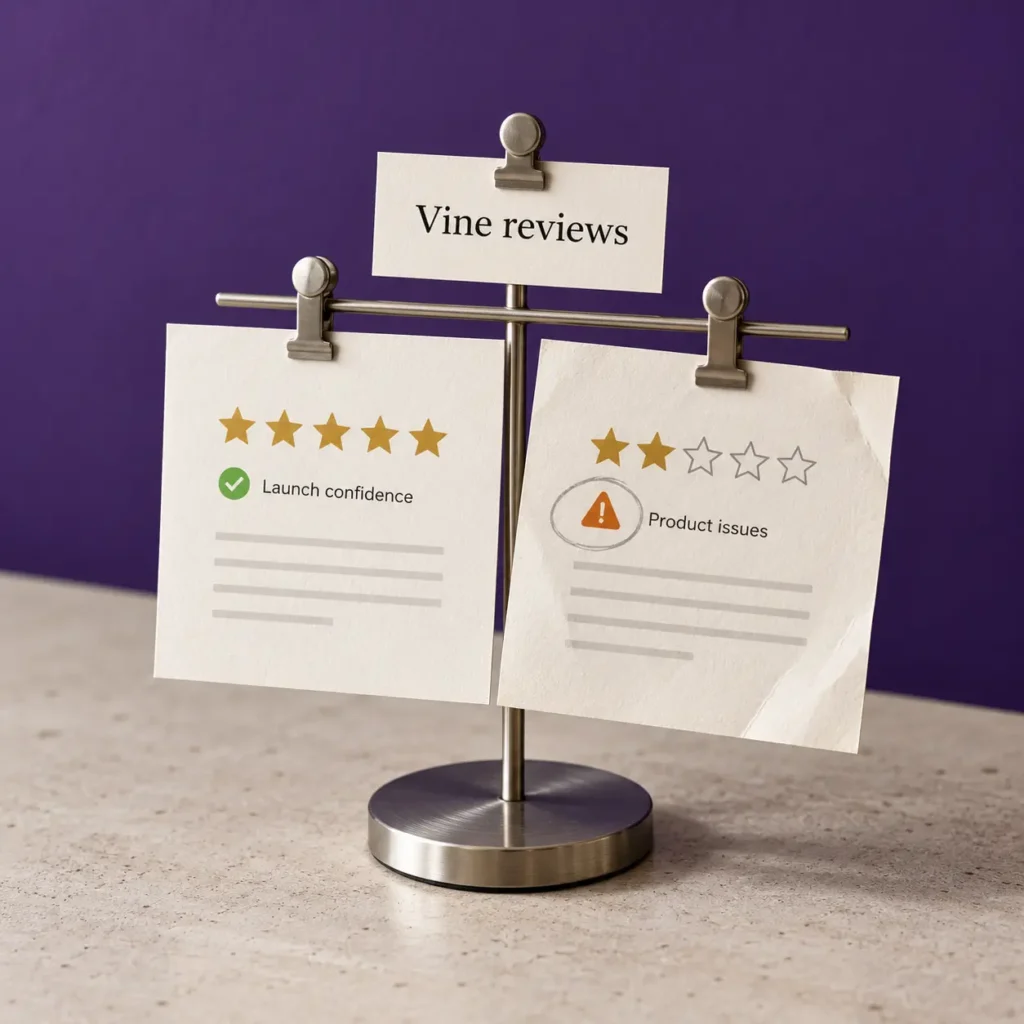
That is also precisely why Vine reviews are worth having. Amazon states plainly that “participation in Vine Voices is not dependent on the reviewer providing positive feedback,” and the reviews carry a “Vine Review” badge for transparency. A review nobody could influence is worth more than ten a seller arranged.
When does Vine hurt rather than help?
Four product profiles, and all four are fixable before enrolling.
Unresolved quality variance. If one sample in five has a defect, Vine will find it. Thirty honest reviewers are a more rigorous QC process than most sellers run, and their findings become permanent.
Fit, sizing or assembly dependence. Apparel that runs small, furniture with poor instructions, anything requiring a step people skip. These generate 2 and 3 star reviews that are accurate and devastating on a new ASIN with no volume to dilute them.
Packaging not yet final. Damage in transit is one of the most common early review complaints, and it is a packaging problem rather than a product problem. Reviewers do not make that distinction.
A parent ASIN where one child is weaker. Reviews roll up. A single underperforming variation can drag the rating customers see on the whole family.
The arithmetic is what makes this asymmetric. A new ASIN has no review base. Three 2-star reviews out of ten put the displayed rating near 3.5, which is also the threshold Amazon itself names when recommending which products to advertise. You then need a large number of positive reviews to climb back, and you are climbing with advertising that is now less effective because the rating is lower.
A deliberate Vine unit strategy usually means enrolling fewer units than the maximum, later than the earliest possible date, and only after the product is genuinely finished.
Quick Verdict: how many units to enroll
- Start with the free tier, two units, on any product where you have the slightest doubt. It costs nothing and it is a real test.
- Move to 3 to 10 units once two come back clean. This is the right default for most launches: enough social proof to matter, small enough to survive a surprise.
- Use 11 to 30 only on a proven product, one already selling elsewhere, or a line extension of something with a strong review history.
- Enroll nothing while a packaging, sizing or instruction change is pending. Wait the three weeks. The reviews last longer than the delay.
Why is Vine allowed when paid reviews are not?
The distinction is conditionality, not the free product, and it is worth understanding because sellers get this wrong in both directions.
Amazon’s policy is that “selling partners cannot offer compensation in exchange for a positive or negative review.” The prohibited list includes “a review in exchange for monetary reward,” “a review by someone who has a direct or indirect financial interest in the product,” and “a review by the product manufacturer, posing as an unbiased shopper.”
Vine does not breach that, because the free unit is not conditional on what the reviewer says. Amazon states participation is “not dependent on the reviewer providing positive feedback,” reviewer selection is Amazon’s rather than the seller’s, the seller cannot contact the reviewer, and the review carries a badge disclosing the arrangement.
Remove any one of those four and it becomes review manipulation.
Amazon’s enforcement scale is worth knowing before anyone suggests a shortcut. Amazon states it analyses “100% of product reviews before they are posted,” that in 2023 it “proactively stopped more than 250 million suspected fake reviews,” and that it took “legal action against more than 150 bad actors in the U.S., China, and Europe” that year.
The practical point: Vine is the sanctioned route, and the reason it is sanctioned is the reason it carries risk. You cannot buy the outcome.
How should Vine fit into a launch sequence?
Order matters more than timing, because several steps gate each other.
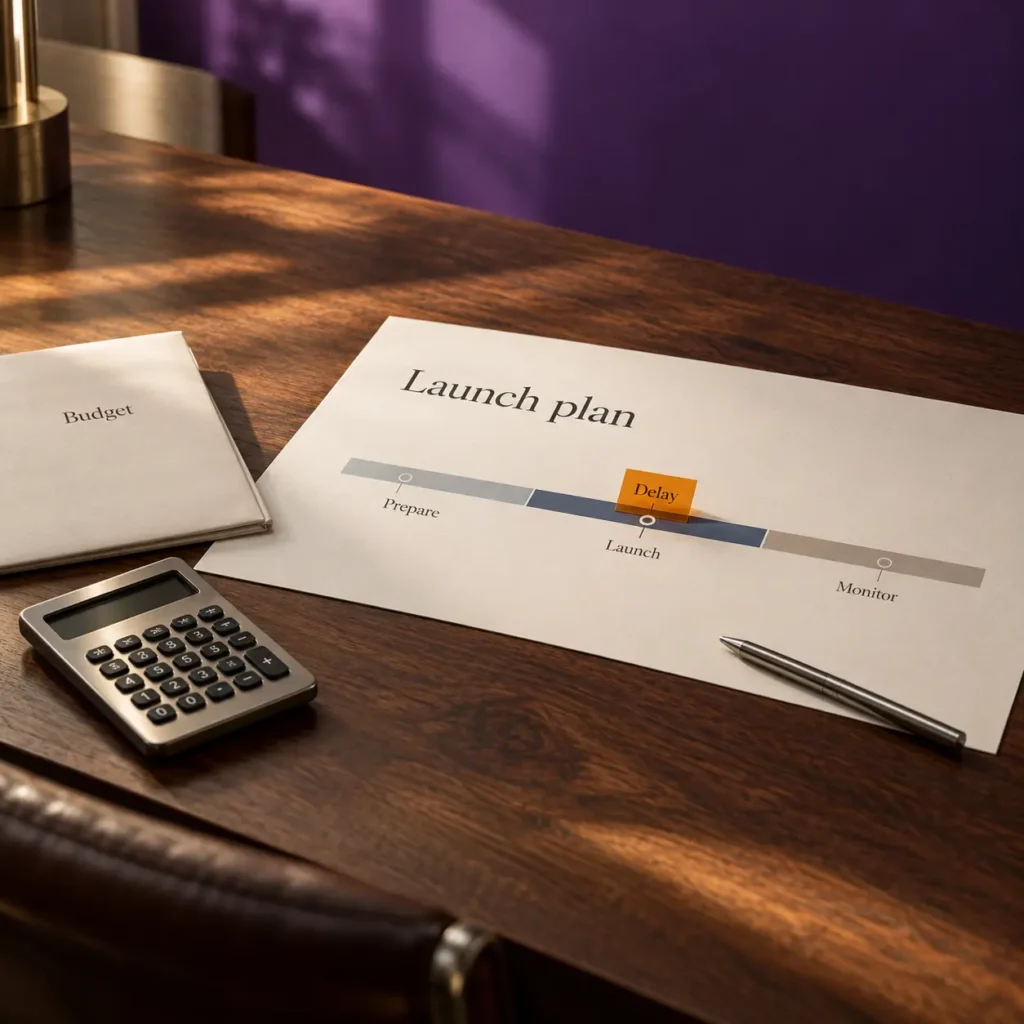
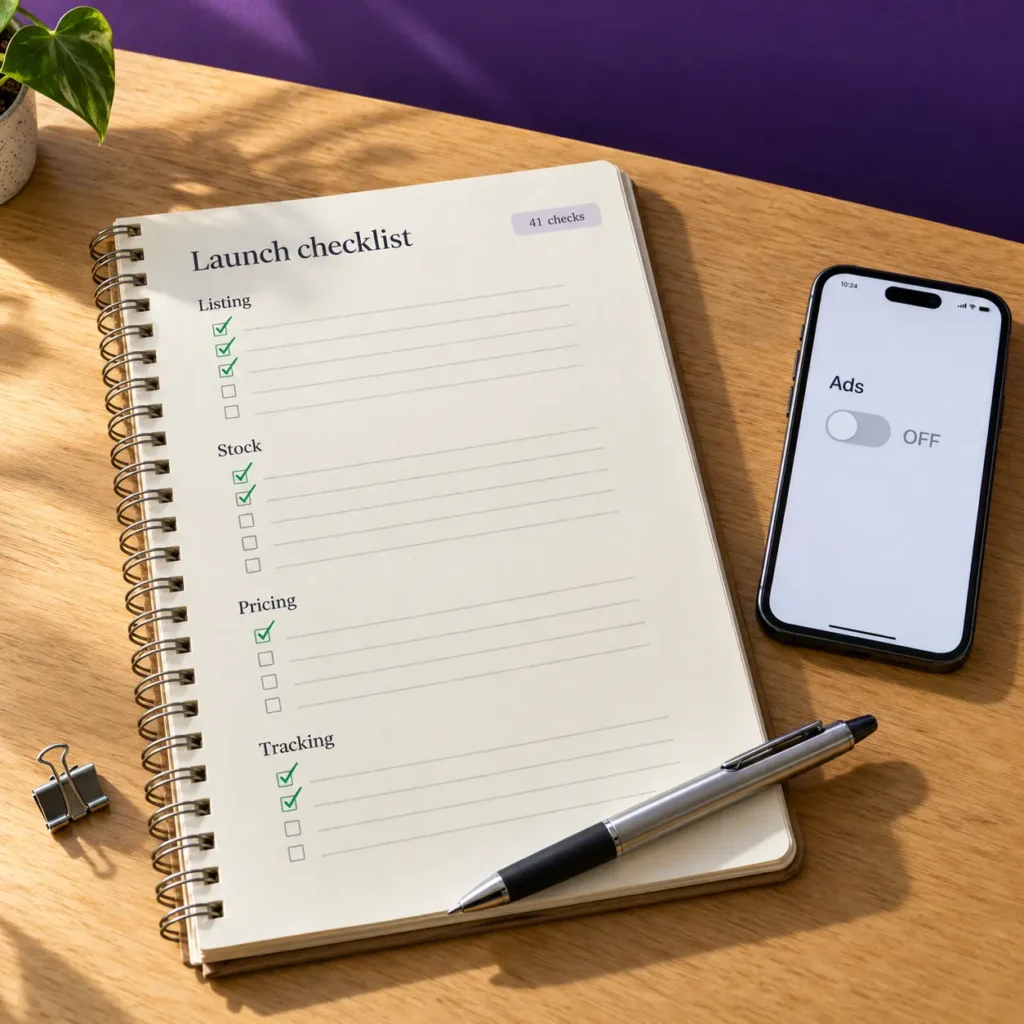
First, finish the product. Samples approved, packaging tested in transit, instructions written for someone who has not seen the product before. This is the step that gets compressed and it is the one that causes bad Vine reviews.
Second, get Brand Registry in place, or confirm your products qualify under the generic exception. Vine sits downstream of it.
Third, create the FBA listing and send inventory, allowing Amazon’s recommended three weeks for it to be available in the fulfillment network before your planned launch date.
Fourth, enroll in Vine while you are still under 30 reviews, starting with the free two-unit tier if there is any doubt.
Fifth, start advertising once the listing is complete and in stock. Amazon’s own new ASIN guidance puts it in the same order, advising sellers to “review your product detail pages, inventory levels, and pricing before launching campaigns.”
The sequencing error that costs most is enrolling late. Because eligibility requires fewer than 30 existing reviews, a product that sells steadily for a few months can cross the threshold and lose access to the programme permanently. Sellers who delay Vine until sales justify the fee often find the option has closed. If the product is finished, enrolling early is cheaper than enrolling later, and at the free two-unit tier it costs nothing to begin.
Vine reviews arriving while advertising ramps is the combination you want, which is why a compliant review plan belongs in the launch schedule rather than being added once sales disappoint.
What this comes down to
Vine is the right call for a finished product and the wrong call for one still being finished. The distinction is not about product quality in the abstract. It is about whether anything is still changing.
The financial risk is small: free at two units, and no charge at all if no review arrives in 90 days. The real risk is that both the claim and the publication are irreversible, and a new ASIN has no review base to absorb a bad one.
So the test before enrolling is simple. If a thoughtful stranger received this product tomorrow with no explanation from you, would their review be one you are happy to carry for the life of the listing? If the answer involves any version of “once we fix the packaging,” wait.
Frequently Asked Questions
How much does Amazon Vine cost?
Enrollment is charged per parent product by unit count: free for up to 2 units, 75 dollars for 3 to 10, and 200 dollars for 11 to 30. There is no additional cost for child products. Amazon does not charge until 30 days after enrollment and after your first review publishes, and not at all if no review arrives within 90 days.
Can Vine reviewers leave negative reviews?
Yes, and that is the point of the program. Amazon states that participation in Vine Voices “is not dependent on the reviewer providing positive feedback,” and that sellers are not allowed to contact Vine Voices directly. Reviews carry a Vine Review badge for transparency. Honest negative reviews are a normal outcome, not a program failure.
Can I remove a bad Vine review?
No. Amazon states that once posted, only the reviewer can edit a review and only Amazon can suppress it, and that neither Amazon nor selling partners can edit, ask customers to edit, or remove a review. Your only recourse is reporting a review that violates Amazon’s policies, which is a narrow exception.
Can I cancel Vine enrollment?
Only before a reviewer claims a unit. Amazon states that once products have been claimed you cannot cancel enrollment, though you can stop enrollment to prevent further claims. Amazon also notes that stopping does not guarantee reviews will not be published for units already claimed.
Is Amazon Vine worth it for a new product?
For a finished product, usually yes, because it is the only sanctioned way to get reviews before you have customers. For a product with unresolved quality, sizing or packaging issues, no. Start with the free two-unit tier to test the response before committing to a larger enrollment you cannot reverse.
Resources and further reading
The following sources were used to inform and validate this article.
- Amazon: Vine program for sellers. The enrollment fee tiers, the 30-unit cap, eligibility requirements, the three-week inventory recommendation, and the cancellation rules once units are claimed.
- Amazon: Vine tools page. Second confirmation of the fee structure, the no-charge-within-90-days clause, and the fewer-than-30-reviews eligibility condition.
- Amazon: How Amazon maintains a trusted review experience. That Vine participation does not depend on positive feedback, the Vine Review badge, the inability to remove a published review, and the prohibited-conduct list.
- Amazon: Customer reviews for sellers. Amazon listing Vine as a sanctioned review route on the same page where it prohibits influencing reviews.
- Amazon Ads: Launching new products and ASINs. Amazon’s guidance to review detail pages, inventory levels and pricing before launching campaigns.