Key Takeaways
What an Amazon launch actually costs, how long each stage really takes, and the three failure points behind most first launches that go wrong.
- Amazon publishes the deadlines but not the budget. Several new seller incentives expire 90 days after listing, while Amazon declines to name a launch budget figure anywhere.
- The only Amazon spend figures that exist are small. A 10 dollar daily starting budget, a 1 dollar minimum, and arithmetic showing 100 dollars a day can produce up to 3,000 dollars of clicks a month.
- The timeline is dominated by things nobody controls. Production and freight take months, and Amazon publishes no typical receiving duration at all.
- Advertising is almost never the first thing to break. Inventory timing and listing conversion fail earlier and are cheaper to fix.
- Over 50,000 dollars in incentives exist for new sellers, and most of them require action within 90 days of listing.
A first Amazon launch usually fails in a predictable place, and it is not where the seller is looking. The post-mortem tends to focus on advertising, because that is where the money visibly went. The actual break happened weeks earlier, in a stage that did not produce a dashboard.
This article does three things. It assembles the real budget from the figures Amazon publishes and flags clearly where no published figure exists. It lays out the timeline stage by stage, separating Amazon’s rules from industry convention. And it works through what breaks first, in the order it breaks.
Written for a seller whose first launch underperformed and who cannot tell which stage caused it, or one preparing a second attempt and trying not to repeat it.
Quick Verdict: the three real failure points
Inventory timing. Ads cannot serve for an out-of-stock product, and units are not sellable until Amazon reaches Receiving status. Launches that start before this are spending into a wall.
Listing conversion. Traffic arriving at a page that does not convert is the most expensive failure mode, because every dollar of ad spend makes it worse rather than better.
Capital, not budget. The ad budget is usually the smallest line. Inventory, freight and duties consume most of a first launch, and running out of stock in week six undoes the position you bought.
What does an Amazon launch actually cost?
Amazon publishes some of this and declines to publish the rest, which is useful to know before you accept anyone’s number.
What Amazon states. A Professional selling plan is 39.99 dollars a month plus selling fees. Sponsored Products has no monthly or upfront fees, a minimum daily budget of 1 dollar, and Amazon suggests “just 10 dollars a day can help you get clicks and sales.” Amazon’s own arithmetic on budgets is worth borrowing: “if you set your daily budget at 100 dollars, you may receive up to 3,000 dollars worth of clicks in that calendar month.”
What Amazon does not state. A launch budget. Amazon’s new ASIN playbook says only to “choose a budget based on your business goals and use budget features to help manage your spend.” There is no Amazon figure for what a launch should cost, and anyone quoting one is quoting themselves.
What you have to supply. Inventory, freight, duties and tariffs, trademark filing, photography, and any certification your category requires. For most first launches these together are several times the advertising budget.
The honest framing: your advertising budget is a decision you make monthly and can change tomorrow. Your inventory commitment is a decision you make once, months in advance, and cannot undo. Treat the second as the real budget.
What incentives offset the cost?
More than most new sellers claim, and the deadlines are the catch.
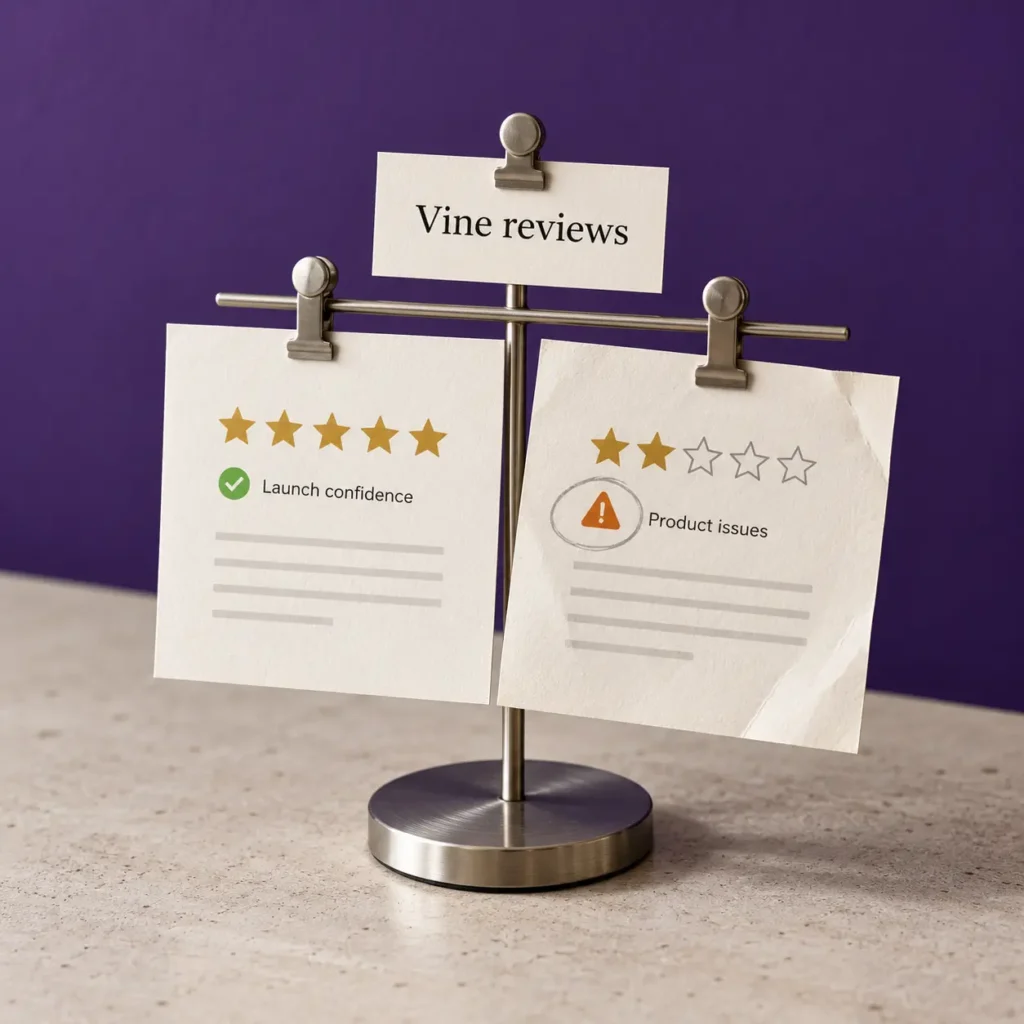
Amazon’s new seller incentives programme is headlined at over 50,000 dollars and available to new-to-Amazon sellers on Professional plans. The components Amazon publishes include up to 52,500 dollars in referral fee waivers in the first year, 10% back on the first 50,000 dollars in branded sales then 5% on the next 950,000, a 200 dollar Vine credit, 700 dollars in fulfillment credits, Sponsored Products credits at 50, 200 and 1,000 dollars tied to matching spend, and a 50 dollar coupon credit.
Now the part that costs people money. Almost every one of these keys off a 90 day window from listing your first product: creating your first FBA shipment, enrolling in Vine after Brand Registry, creating a Sponsored Products campaign, creating a coupon. The advertising credits add a second condition, requiring the credit to be spent within 30 days of campaign launch.
The FBA New Selection programme adds free storage for the first 200 units of each new parent ASIN for 120 days after receipt, with an Inventory Performance Index of 300 or higher required, and automatic enrollment for new sellers who create a first shipment within 90 days.
None of this changes whether your product works. All of it changes your first year economics, and the windows are short enough that a slow trademark or a delayed shipment can close several at once.
How long does a launch actually take?
Longer than the advertising guides imply, and the long stages are the ones you do not control.
| Stage | Duration | Source |
| Trademark filing to Brand Registry eligibility | Months, varies by office | Amazon accepts a pending application, which shortens this |
| Production | 30 to 60 days typically | Industry convention, not an Amazon figure |
| Freight by sea | 30 to 45 days typically | Industry convention |
| Freight by air | 7 to 12 days typically | Industry convention |
| Arrival to Checked in | Several days | Amazon states a shipment “might be checked in several days after the date it arrives” |
| Checked in to Receiving to sellable | No published figure | Amazon publishes no typical receiving duration |
| Vine inventory lead time | 3 weeks before planned launch | Amazon’s own recommendation |
| Organic visibility stabilising | 1 to 3 months | Per an Amazon representative on Seller Forums |
Two things to take from that table. First, four of the eight rows are either convention or unpublished, which means any precise launch timeline you have been sold is partly invented. Confirm the convention rows against your own supplier and freight history rather than against a blog.
Second, the stage with no published duration sits directly before the stage where you start spending. Amazon tells you what Receiving means and that received units are available for sale. It does not tell you how long getting there takes, and it notes it can take longer during high volume periods. Planning a launch date to the day, with ad spend committed, against a step Amazon will not put a number on, is the most common way a first launch starts into an empty listing.
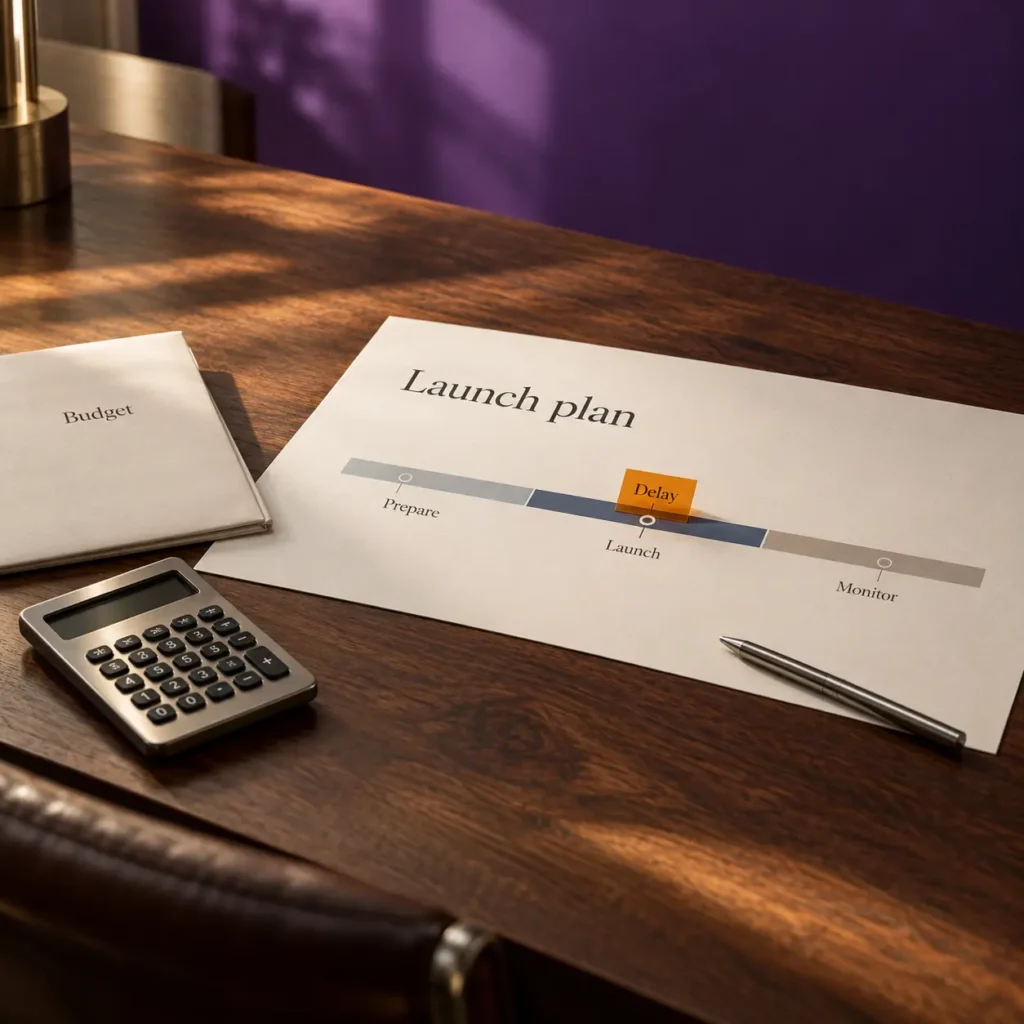
Realistically, kickoff to first sale runs four to six months by sea and three to four by air, with trademark running in parallel and sometimes taking longer than both. Building the plan around a sequenced launch system rather than a date on a calendar is what absorbs those unknowns.
What breaks first, and in what order?
Three failure points, and they fail in this sequence.
One: inventory timing. The first break, and the quietest. Ads go live against a listing whose units are delivered but not received, so impressions are low and nobody knows why. Or worse, the launch starts well and stock runs out in week six, at which point Amazon automatically pauses advertising for the out-of-stock product because it can no longer be the featured offer. The position you spent six weeks buying goes to a competitor, and getting it back costs more than holding it would have.
This is why ads and inventory cannot sit with different people. Stock and ad-spend sync is not a reporting nicety at launch, it is the thing that decides whether week six exists.
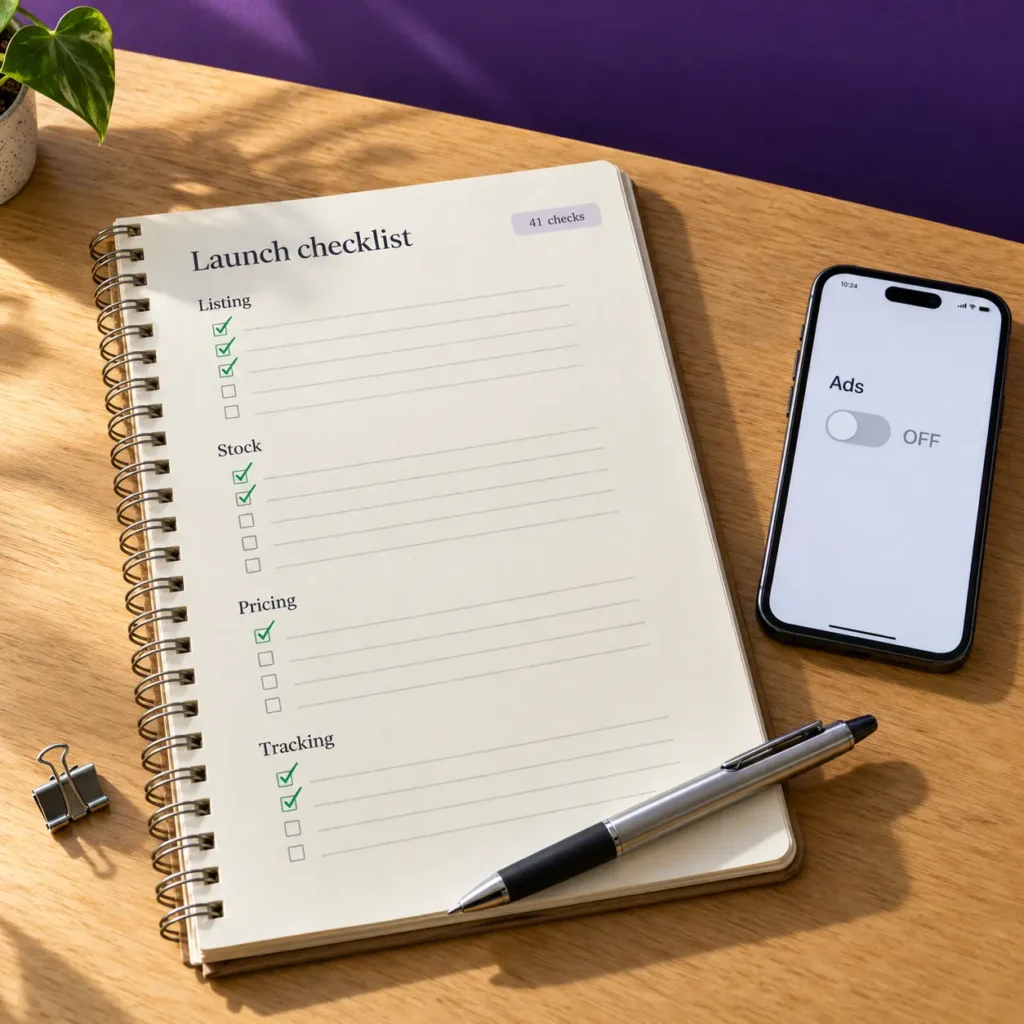
Two: listing conversion. The second break and the most expensive, because advertising amplifies it. Traffic arrives, does not convert, and every additional dollar makes the loss bigger. Amazon’s advertising guidance sets a visible bar here: five or more reviews at 3.5 stars or higher, four or more zoomable images, at least three bullets. A product launching below that bar is launching into a known disadvantage.
The diagnostic is simple. Healthy click-through rate with weak conversion is a listing problem, not a bidding problem. No bid adjustment fixes it and lowering bids only hides it.
Three: advertising structure. The third break and the one everyone blames first. Mixed price points in one ad group, so no bid is correct. No placement adjustments set. Budgets exhausting by midday. These are real problems and they are genuinely the cheapest of the three to fix, which is why fixing them does not rescue a launch that broke at stage one or two.
The order matters because the response does. If you fix advertising on a launch that broke at inventory, you will conclude advertising does not work.
Quick Verdict: where to put the money
- Inventory and freight first, and plan for a second order before the first sells through. Running out in week six is more expensive than ordering more than you needed.
- Listing and creative second. Lifting conversion lowers what every future click costs, which is the only lever that improves with scale.
- Advertising third, starting small. Amazon suggests 10 dollars a day as a start. Scale it once conversion is proven, not before.
- Leave a reserve. The most common cause of a dead launch is a brand that spent its last capital on ad budget and had nothing left to restock with.
How long before you should judge it?
Longer than most sellers wait, and Amazon offers less guidance here than you would hope.
Amazon’s best practices guide says to “monitor your metrics at least twice a week.” It gives no rule for how long to wait before judging a campaign, and anyone quoting you one is inventing it.
What Amazon does publish are two timeframes worth knowing. Its new ASIN guidance cites internal data from January 2025 that brand owners who use Sponsored Brands see 23% higher sales after 13 weeks. And an Amazon representative on Seller Forums described organic visibility as typically taking one to three months to stabilise.
Both point to the same practical answer. Thirteen weeks is a reasonable first judgement point for a launch, and the first four weeks tell you almost nothing except whether the mechanics work.
What to check at four weeks: is the listing converting, is stock holding, are ads serving. Those are mechanical questions with clear answers. What to check at thirteen weeks: is organic share growing, is total advertising cost of sales trending down, is the product profitable per unit after fees and ads. Those are business questions, and asking them at week four produces a panic rather than a decision.
What would you do differently on a second launch?
Four things, in the order they pay off.
Order inventory for the restock before the first sells through. The single highest-return change. A stockout at week six costs more than carrying extra stock for a quarter.
Finish the listing before stock lands, not after. Copy, images, A plus content and backend terms complete while the container is still at sea. The week stock arrives is the worst possible week to be writing bullets.
Start advertising smaller and hold longer. Amazon’s own suggested starting point is 10 dollars a day. Most failed first launches started at five times that and cut it in week three, which gives neither the data nor the position.
Set a baseline before day one. Impressions, clicks, cost per click, conversion rate, organic session share. Without it, every decision in month two is an argument about what normal looked like.
There is a fifth change that is harder to make and worth more than the other four combined: decide in advance what would make you stop. Write down, before launch, the figure at which you would cut the product rather than fund another order. Most capital lost on Amazon is not lost on a product that failed quickly. It is lost on one that underperformed slowly, for four quarters, while its owner kept funding it because each month looked recoverable. A number agreed in advance is the only reliable defence against that.
What this comes down to
The budget that matters in an Amazon launch is not the advertising budget. It is the inventory commitment, which is larger, made earlier, and impossible to reverse. The advertising budget is the line you can change tomorrow, which is why it attracts attention it does not deserve.
The timeline is dominated by stages Amazon does not publish durations for, so build in slack rather than precision. Four to six months by sea is realistic. A date on a calendar is not.
And when a launch underperforms, check the order. Inventory timing breaks first, listing conversion second, advertising structure third. Diagnosing in that order costs a day. Diagnosing in reverse costs a quarter and usually ends with the wrong conclusion about whether Amazon works for your product.
Frequently Asked Questions
How much does it cost to launch a product on Amazon?
Amazon publishes only small figures: 39.99 dollars a month for a Professional plan, a 1 dollar minimum daily ad budget, and a suggested 10 dollars a day to start. Amazon does not publish a launch budget. Your largest costs are inventory, freight and duties, which typically exceed the advertising budget several times over.
How long does an Amazon product launch take?
Realistically four to six months from kickoff by sea freight, or three to four by air, with trademark running in parallel. Most of that is production and freight. Amazon publishes no typical duration for the receiving step that makes units sellable, so build slack into the plan rather than committing to a date.
What usually goes wrong in a first Amazon launch?
Inventory timing breaks first, usually a stockout around week six that pauses advertising and hands back the position. Listing conversion breaks second, where ads amplify a page that does not convert. Advertising structure breaks third and is the cheapest to fix, which is why fixing it alone rarely rescues a launch.
How long should I wait before judging a launch?
Around thirteen weeks for a business judgement. Amazon cites internal data that brand owners using Sponsored Brands see 23% higher sales after 13 weeks, and an Amazon representative described organic visibility as taking one to three months to stabilise. The first four weeks only tell you whether the mechanics are working.
What Amazon incentives can offset a launch budget?
Amazon offers new sellers a package headlined above 50,000 dollars, including referral fee waivers, a percentage back on branded sales, Vine and advertising credits and fulfillment credits. Most components require action within 90 days of listing your first product, and advertising credits must be spent within 30 days of campaign launch.
Resources and further reading
The following sources were used to inform and validate this article.
- Amazon: New seller incentives. The incentive components, the 90 day from listing windows, and the 30 day advertising credit spend condition.
- Amazon: FBA shipment tracking. Shipment status definitions, confirmation that received units are available for sale, and Amazon’s note that check in can take several days after arrival.
- Amazon Ads: Launching new products and ASINs. Amazon’s instruction to review detail pages, inventory and pricing before launching campaigns, and the 13 week Sponsored Brands figure from Amazon internal data.
- Amazon Ads: Best practices for your Sponsored Products ads. The 10 dollar starting daily budget, the daily to monthly spend arithmetic, and the twice weekly monitoring guidance.
- Amazon: FBA New Selection program. The 200 unit and 120 day free storage terms, the Inventory Performance Index requirement, and automatic enrollment conditions.
- Amazon Seller Forums: Honeymoon period for new brands and launches. An Amazon representative describing organic visibility as typically taking one to three months to stabilise.